21 May 2026
A Guide to Buying an Electric Vehicle in Ireland (2026)
There is a growing sentiment that, after several false dawns, electric vehicles (EVs) are finally about to take off in terms of widespread adoption. Here in Ireland, a plunge in EV sales in 2024 was reversed in 2025 when sales figures surpassed those from 2023.
And last month (April 2026) amid fuel protests and rising pump prices, sales of new EVs increased by 110% versus the same month in 2025 according to official SIMI figures. Those same figures show that so far this year, sales of plug-in cars have accounted for 37% of new car sales.
And it’s not just the in the new car market in which EV sales are soaring - Cartell data also points to rising used EV sales citing a 31% increase in 2025 versus 2024.Whilst we weren’t able to dig out any reliable figures for 2026 just yet, it’s clear that customers in Ireland are recognising the value in the used EV market. According to the Irish Times, EVs are now around 11% cheaper than their diesel counterparts in the used market.
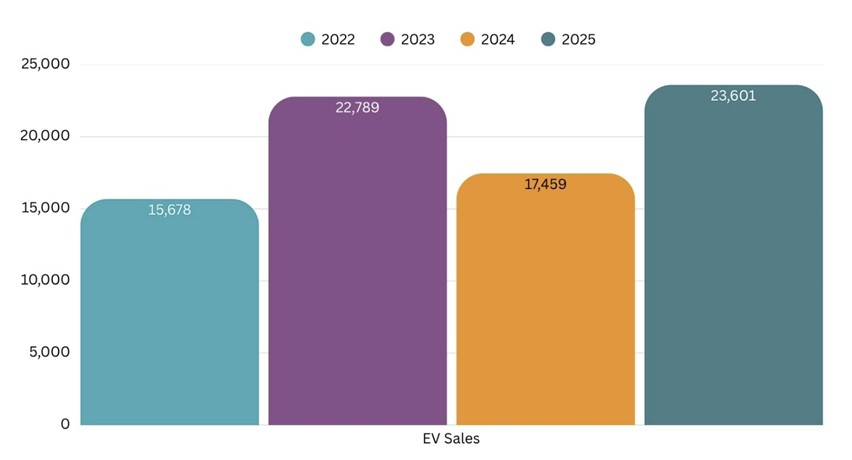
In this article, we will guide you through the benefits of buying an EV, how to choose the right EV for your circumstances and your options when it comes to paying for your new (or used) electric vehicle. Let’s dig in.
Why Choose an Electric Vehicle?
There are a wide range of benefits of choosing to purchase an electric vehicle over regular ICE (internal combustion engine) alternatives - both for the environment and for your pocket. Benefits can broadly be broken down into environmental benefits, financial benefits, growing market stability and improving performance & range.
Environmental Benefits of Choosing an EV
Obviously the primary reason for the existence of electric vehicles in the first place is their environmental benefits over ICE alternatives. According to the SEAI, there are a range of environmental benefits of electric vehicles, both direct and indirect. They include:
- Lower overall CO2 emissions per kilometre driven, even when emissions from electricity generation are taken into account
- No tailpipe emissions, helping to improve air quality for pedestrians, cyclists, and communities
- Reduced NOx and SOx emissions compared to ICE vehicles
- Fewer harmful particulate emissions, particularly when compared to diesel engines
- Lower noise pollution due to quieter electric motors
- Reduced wear on brakes and tyres, resulting in less dust, waste, and replacement parts over time
- Better integration with renewable energy and smart electricity systems, particularly through off-peak and overnight charging
- Supporting Ireland’s transition towards cleaner and more sustainable energy use overall
Financial Benefits of Choosing an EV
Being green is a lot easier when it makes financial sense, and thankfully there are also a wide range of financial benefits associated with choosing an EV. Some are long-term savings that come naturally from the mechanics and efficiency of electric vehicles compared to ICE cars, while others are government incentives designed to encourage EV adoption and help meet climate targets. The main ones include:
1. Lower transport costs
One of the biggest advantages of switching to an EV is the potential reduction in day-to-day running costs. According to the (SEAI), EV drivers can see up to 74% savings in transport costs compared to drivers of equivalent diesel vehicles.
According to SIMI: “electricity is nearly always cheaper than filling an ICE vehicle with petrol or diesel - particularly if you charge the battery of the car at home.”
Top Tip: The SEAI provides a useful online comparison tool that allows you to compare the running costs of specific EVs against ICE alternatives.
2. Lower motor tax & VRT
Electric vehicle owners can also benefit from significant savings when it comes to annual motor tax and Vehicle Registration Tax (VRT), helping to reduce both the upfront and ongoing cost of ownership.
Battery electric vehicles (BEVs) currently qualify for the lowest rate of motor tax in Ireland at €120 per year. This can compare very favourably to higher-emission ICE vehicles, which may fall into much higher annual tax bands.
Buyers of qualifying new electric vehicles may also benefit from VRT relief of up to €5,000. VRT is a tax applied when a vehicle is first registered in Ireland, and the relief available for BEVs can substantially reduce the purchase price of a new EV. Full relief generally applies to vehicles with an Open Market Selling Price (OMSP) of up to €40,000, with tapered relief available up to €50,000.
3. EV Grant & Other Government Incentives
The Irish Government currently offers a range of incentives aimed at making EV ownership more accessible, including:
- Grants of up to €5,000 towards the purchase of a new battery electric vehicle (subject to eligibility criteria and price caps)
- Grants of up to €600 towards the installation of a home charger for eligible vehicles
- Benefit-in-Kind (BIK) incentives for company car users choosing electric vehicles
4. Lower maintenance costs
Electric vehicles generally have fewer moving parts than ICE cars, which can help reduce servicing and maintenance costs over time. There is no engine oil to change, less brake wear due to regenerative braking, and fewer complex mechanical components that require maintenance.
A review by zecar suggests that over a 5 year timespan, maintenance costs can be over 40% less for an EV car vs an ICE equivalent. =
According to them: “Electric cars now cost less to maintain than any other type of vehicle. While they’re not immune to occasional high repair costs, these are rare and often covered by long warranties. With battery prices falling and more local technicians trained in EV repair, servicing costs are only expected to drop further.”
5. Some discounts from energy providers
Some energy providers in Ireland, like Bord Gáis, now offer EV-specific electricity plans designed to support lower-cost home charging, particularly overnight when electricity demand is lower.
Growing EV Market Stability
A common concern around EVs in the past was uncertainty about resale values, charging infrastructure, and whether electric vehicles would become fully mainstream. However, the Irish EV market has continued to mature rapidly in recent years, helping to increase confidence among both new and used car buyers.
1. Greater Adoption & Less Risk
As more drivers switch to electric vehicles, the market becomes more stable and predictable. Greater adoption means stronger charging infrastructure, improved servicing networks, better availability of second-hand vehicles, and increased buyer confidence overall.
According to Silicon Republic, EVs are increasingly moving beyond the “early adopter” phase and becoming a mainstream option for motorists. Improvements in battery technology, falling operating costs, and increasing production scale are helping strengthen confidence in the long-term viability of EV ownership.
As adoption continues to grow across Ireland and Europe, many of the perceived risks around EV ownership naturally begin to reduce.
2. Greater Choice & Stronger Market Confidence
The continued growth of the EV market has also led to a much wider choice of vehicles across different price points and use cases, from compact city cars to larger family SUVs and commercial vehicles.
Recent data from (ZEVI) shows that Ireland’s used EV market is continuing to strengthen in 2025, with increased supply, improved affordability, and stronger activity in the second-hand market. (zevi.ie)
A stronger used market is an important sign of long-term market confidence because it helps reassure buyers about resale demand and the overall stability of EV ownership. As more EVs enter the market, consumers benefit from greater competition, more choice, and improving value across both new and used vehicles.
Improving EV Range & Charging Infrastructure
Range anxiety has historically been one of the biggest concerns around electric vehicle ownership. However, advances in battery technology mean this is becoming less of an issue for many drivers.
According to Nevo, modern EVs now offer average driving ranges of approximately 400–600km on a single charge, making them more than capable of handling the vast majority of day-to-day journeys, commuting, and even longer trips around Ireland.
While Ireland’s public charging network still has areas that could be improved, charging infrastructure is expanding rapidly. According to the Draft National EV Charging Strategy 2026–2028, the number of publicly available charge points increased from approximately 1,700 in September 2022 to 3,237 by the end of 2025. The strategy also outlines plans for significant further expansion through a combination of government-backed infrastructure projects and private sector investment.
This continued improvements in in-car technology and growth in charging infrastructure is helping make EV ownership more practical and helping to strengthen confidence among drivers considering making the switch to electric.
Types of Electric Vehicles
Before we dive into some tips for choosing the right EV for you, it’s important to understand the different types of electric vehicles available in Ireland. These are Battery Electric Vehicles (BEVs), Hybrid Electric Vehicles (HEVs) and Plug-in Hybrid Electric Vehicles (PHEVs) - each of these have their own pros and considerations depending on your driving habits, budget, and access to charging.
Battery Electric Vehicles (BEVs)
Battery Electric Vehicles (BEVs) are fully electric cars powered entirely by a battery and electric motor, with no petrol or diesel engine. They are charged by plugging into a home charger or public charging point.
BEVs generally offer the lowest running and maintenance costs, as well as zero tailpipe emissions. They are best suited to drivers with access to regular charging and are becoming increasingly practical as driving ranges and charging infrastructure continue to improve.
Popular BEV models in Ireland include the Tesla Model 3, Volkswagen ID.4, Hyundai Kona Electric, and Kia EV6.
Hybrid Electric Vehicles (HEVs)
Hybrid Electric Vehicles (HEVs) combine a petrol engine with a smaller electric motor and battery. The battery charges automatically while driving, so there is no need to plug the vehicle in.
HEVs can improve fuel efficiency and reduce fuel costs compared to traditional petrol or diesel cars, while avoiding the need for charging infrastructure. However, they still rely on fossil fuels and do not offer fully electric driving.
Popular HEV options in Ireland include the Toyota Corolla Hybrid, Toyota Yaris Hybrid, and Hyundai Tucson Hybrid.
Plug-in Hybrid Electric Vehicles (PHEVs)
Plug-in Hybrid Electric Vehicles (PHEVs) combine a petrol engine with a larger rechargeable battery that can be plugged in and charged. They can typically complete shorter journeys using electric power alone before switching to the petrol engine for longer trips.
PHEVs can offer a useful middle ground for drivers who want lower fuel costs and some electric driving capability without relying fully on public charging infrastructure. However, the financial and environmental benefits depend heavily on charging the vehicle regularly.
Popular PHEV models in Ireland include the Toyota RAV4 Plug-in Hybrid, Kia Sportage Plug-in Hybrid, and Hyundai Tucson Plug-in Hybrid.
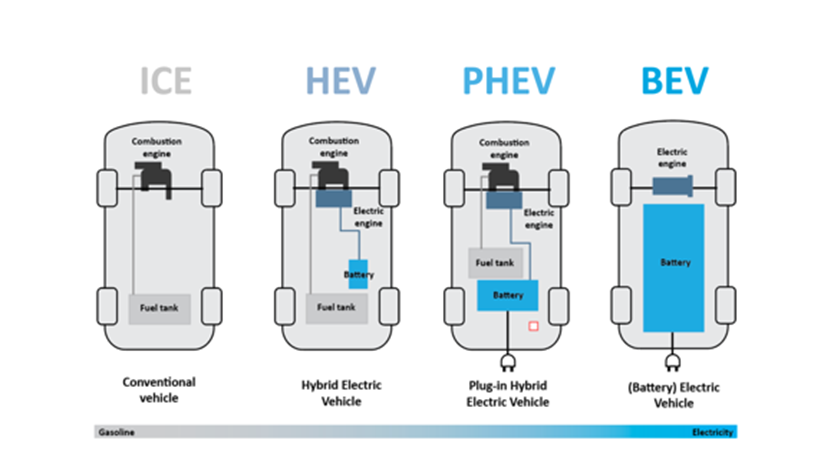 HEV vs PHEV vs BEV (Source: Green Power Systems)
Choosing the Right Electric Car For Your Needs
The best EV for you will depend on how you use your car day-to-day, where and how you plan to charge it, your budget, and the features and comfort levels that matter most to you. Taking the time to think through your own needs and habits can help you choose an EV that suits your lifestyle and saves you money in the long run. Some key considerations include:
- Travel Habits
- Charging Plan
- Budget
- Technology Required
- Warranty and Support
- Comfort
1. Travel Habits
One of the most important factors when choosing an EV is understanding your typical driving habits. Ask yourself questions like:
- Will this be your primary car or a second household vehicle?
- How many kilometres do you typically drive each week?
- Do you regularly make long motorway journeys or mainly shorter local trips?
- How often do you travel beyond the range of a single charge?
For families looking for a second car for shorter daily commutes, school runs, or local journeys, a lower-range battery electric vehicle (BEV) may be more than sufficient and can often represent excellent value.
On the other hand, drivers regularly covering long distances may prioritise vehicles with higher range capabilities or faster charging performance.
Your driving habits may also influence whether a fully electric BEV, HEV or PHEV is the best fit. For example, some drivers transitioning to electric for the first time may prefer a hybrid or plug-in hybrid if they frequently travel long distances or are concerned about charging availability. Others may find that a fully electric vehicle comfortably covers nearly all of their journeys.
2. Charging Plan
Before choosing an EV, it is important to think realistically about how and where you plan to charge it. Your charging setup can have a major influence on the type of electric vehicle that best suits your lifestyle.
There are 4 main ways to charge an EV:
Charging from a Standard Three-Pin Plug
Most EVs can be charged using a standard three-pin household socket and a compatible charging cable. Often referred to as “trickle charging”, this is the slowest charging method available, but it can work well for occasional charging or drivers covering shorter distances with plenty of time to recharge.
However, this is generally not recommended as a primary long-term charging solution, as standard household sockets are not designed to deliver high levels of power continuously over long periods.
Installing a Home Wall Charger
For many EV owners, a dedicated home wall charger is the most convenient and cost-effective solution. Charging at home overnight can significantly reduce running costs compared to petrol or diesel vehicles and allows the car to effectively recharge while parked.
There are also grants available in Ireland to help reduce the cost of installing a home charger. Drivers with access to off-street parking or a driveway will generally have the easiest home charging experience.
If you have reliable home charging, you may feel more comfortable choosing a fully electric battery electric vehicle (BEV), even with a smaller battery range.
Using Public Charging Infrastructure
As we’ve already mentioned, Ireland’s public charging infrastructure has expanded significantly in recent years, with public and on-street chargers now widely available across the country. Public charging networks allow drivers to charge while travelling, shopping, or stopping on longer journeys.
Many public chargers offer faster charging speeds than home charging, including rapid chargers commonly found at motorway services and petrol station forecourts. However, charging costs can vary depending on the provider and charging speed, with rapid charging typically costing more.
Drivers who rely heavily on public charging may want to prioritise:
- Higher battery range
- Faster charging capabilities
- Access to rapid charging networks along their regular routes
Workplace Charging
Some employers now provide EV charging facilities at workplaces as part of broader sustainability initiatives. Access to workplace charging can make EV ownership much more practical, particularly for drivers who cannot install a charger at home.
If workplace charging is available to you, it may reduce the need for frequent public charging and provide greater flexibility when choosing an EV.
The charging facilities available to you will be a big influence on the type of EV you choose.. Drivers with access to reliable home or workplace charging may comfortably choose a fully electric vehicle, while those with limited charging access or frequent long-distance travel may prefer a higher-range EV or a plug-in hybrid vehicle.
3. Budget
The EV market now offers options across a wide range of price points, from affordable second-hand models to premium long-range vehicles with advanced technology and luxury features.
While some EVs may still have a higher upfront purchase price than petrol or diesel equivalents, costs are continuing to come down and government grants and incentives can significantly reduce the gap. It is also important to consider the lower EV running costs that we’ve discussed already in this article.
The second-hand EV market is also continuing to grow, creating more affordable entry points for drivers considering the switch to electric.
As with any vehicle purchase, there are trade-offs at different price levels. Lower-cost EVs may offer smaller batteries, shorter range, slower charging, or fewer premium features, while higher-end models may provide longer range, improved performance, faster charging capability, and more advanced technology.
Some of the Best Electric Cars in Ireland for Under €20K
Model | Price from: | What You Need to Know |
Dacia Spring | Ireland’s cheapest EV and even one of the cheapest new cars overall. Designed primarily for city driving and commuting. Small 26.8 kWh battery gives around 220 km WLTP range. No DC fast charging, so it relies mainly on home charging. | |
BYD Dolphin Surf | BYD’s new entry-level EV is expected to aggressively target the affordable city EV market. Compact, efficient, and well-equipped for the price, it is expected to compete directly with the Dacia Spring and Hyundai Inster. | |
Hyundai Inster | Compact crossover that offers significantly more practicality and range than the Dacia Spring. Up to 370 km WLTP range, DC fast charging capability, and smart charging support make it one of the strongest value EVs arriving in 2026. |
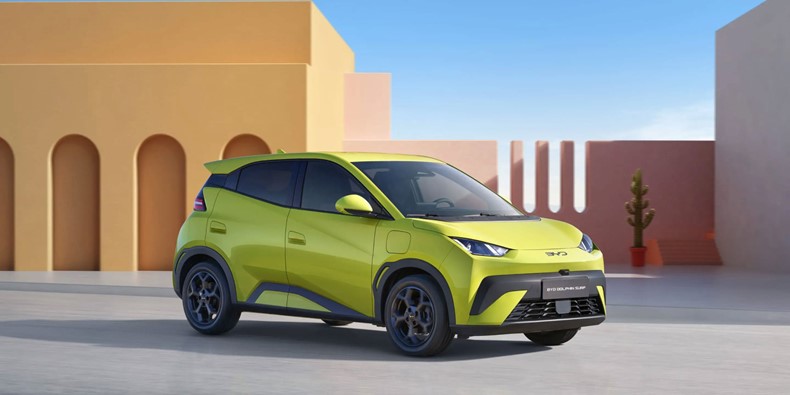
BYD Dolphin Surf
Some of the Best Electric Cars in Ireland between €20-30k
Model | Price from: | What You Need to Know |
Citroën ë-C3 | Affordable family EV with SUV-inspired styling and similar pricing to the petrol model. Up to 320 km range and strong comfort-focused positioning make it well suited to everyday Irish driving. | |
Renault 5 E-Tech | One of the most anticipated EV launches thanks to its retro design. Available with 40 kWh and 52 kWh battery options, offering up to 400 km WLTP range in higher trims. | |
Renault 4 E-Tech | Renault’s larger retro-inspired EV crossover combines the styling cues of the classic Renault 4 with modern EV practicality. Expected to offer more space and versatility than the Renault 5 while remaining relatively affordable. | |
Kia EV2 | Kia’s new entry-level EV expected in Ireland in spring 2026. Offers modern infotainment, flexible cabin layout, and up to 448 km WLTP range in Long Range trim. |
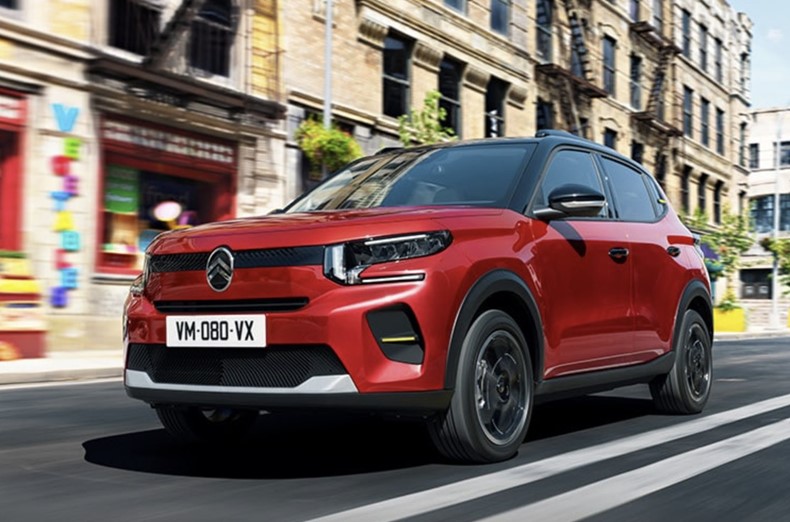
Citroën ë-C3
Some of the Best Electric Cars in Ireland between €30-40k
Model | Price from: | What You Need to Know |
MG4 EV | One of the strongest value EVs currently available. Offers impressive range, sharp handling, and strong equipment levels at a highly competitive price point, making it a popular alternative to traditional petrol hatchbacks. | |
Hyundai Kona Electric | Practical compact crossover with strong efficiency and real-world usability. Offers a comfortable cabin, good technology, and enough range for both commuting and longer Irish journeys. | |
Renault Megane E-Tech | Stylish crossover-hatchback blending premium interior quality with efficient EV performance. Well suited to drivers looking for something more refined than a typical compact hatchback. | |
Volkswagen ID.4 | Spacious and comfortable family SUV with a refined driving experience and practical interior. One of the safest “all-round” EV choices for Irish buyers thanks to its usability, comfort, and solid real-world range. | |
Tesla Model 3 | One of the most efficient EVs on the market with standout range, fast charging, and strong performance. Combines minimalist interior design with advanced software and access to Tesla’s charging ecosystem. | |
Kia EV3 | One of the standout EVs of 2026. Available with up to 605 km WLTP range, making it suitable for virtually all Irish driving scenarios. Strong blend of practicality, technology, and premium feel. | |
CUPRA Born | Sportier alternative to the Volkswagen ID.3 with stronger performance and more aggressive styling. The e-Boost version adds extra power while retaining strong efficiency and practicality. |
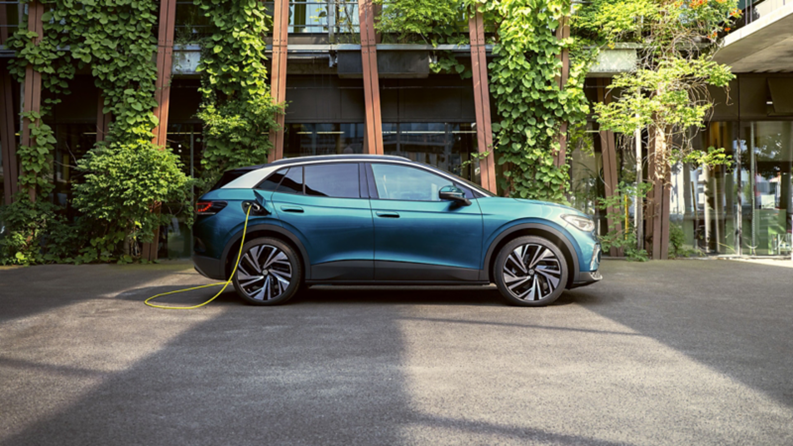
Volkswagen ID.4
Some of the Best Electric Cars in Ireland above €40k
Model | Price from: | What You Need to Know |
BYD Atto 3 | BYD’s family SUV focuses on value, generous equipment levels, and practicality. The Extended Range version offers competitive range and fast charging while undercutting many European rivals on price. | |
Hyundai Ioniq 6 N Line | Sleek, aerodynamic EV saloon that focuses on efficiency, comfort, and futuristic styling. The N Line trim adds a sportier appearance and more premium feel while retaining excellent long-distance capability. | |
Tesla Model Y | Practical electric SUV combining strong range, excellent efficiency, and huge interior space. Popular with families thanks to its versatility, technology, and access to Tesla’s Supercharger network. | |
BMW iX3 | BMW’s first Neue Klasse EV and one of the most technologically advanced EVs arriving in Ireland. Up to 805 km WLTP range and 400 kW charging capability position it at the cutting edge of premium EVs. |
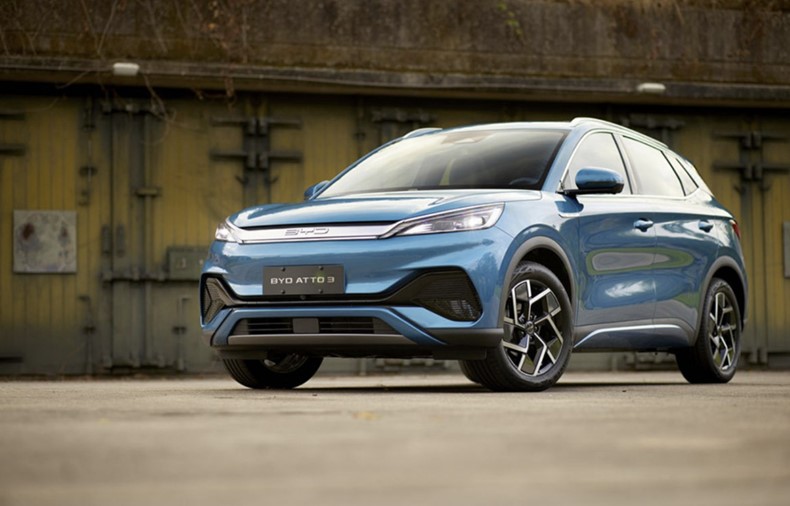
BYD Atto 3
4. Technology Requirements
As you might imagine with such a broad range of options and price points, EVs can vary significantly in terms of technology and features. Some drivers may prioritise advanced driver assistance systems, smartphone integration, heat pumps for improved efficiency, or built-in route planning that incorporates charging stops.
Others may simply want a reliable and practical vehicle without unnecessary complexity. Thinking about the features you genuinely value can help narrow down the right option and avoid paying for technology you may never use.
5. Warranty & Support
Battery warranty coverage and aftersales support are important considerations when purchasing an EV, particularly for buyers entering the market for the first time.
Many manufacturers now offer substantial battery warranties, often covering the battery for 8 years or more. It is also worth researching:
- The manufacturer’s reputation for reliability
- Availability of servicing and support in Ireland
- Battery degradation expectations
- Warranty coverage for both the battery and vehicle components
For second-hand EVs, checking the remaining battery warranty and overall battery health can provide additional peace of mind.
6. Comfort and Practicality
Different drivers and households have very different priorities when it comes to comfort and practicality. Factors such as seating position, boot space, interior quality, passenger space, visibility, and ease of driving can vary greatly between models.
Some drivers may prioritise compact city-friendly vehicles, while others may need larger family SUVs or vehicles suited to long-distance travel.
As with any major car purchase, it is important to test drive multiple vehicles before making a decision. A vehicle that looks ideal on paper may feel very different in practice, and comfort, driving feel, and usability are often best judged from real-world experience.
Paying for Your Electric Vehicle - How to Finance an EV in Ireland
There are several ways to finance the purchase of an EV in Ireland. For most buyers, the decision comes down to balancing monthly affordability with long-term ownership. It’s also important to factor in EV grants and incentives when comparing your options.
The main ways to pay for an EV in Ireland include:
- Using savings
- Personal Contract Plan (PCP)
- Hire Purchase (HP)
- A car loan or Green Loan
1. Using Savings
Paying upfront using savings is the simplest option. There are no monthly repayments, no interest charges, and you own the car immediately.
This can work particularly well for buyers purchasing a used EV, combining savings with a trade-in, or looking to avoid long-term debt altogether.
However, it is important to consider the impact on your emergency savings or financial flexibility before committing a large amount upfront.
2. Personal Contract Plan (PCP)
PCP is another way to finance a new EV in Ireland. It allows buyers to access newer or higher-spec electric vehicles with lower monthly repayments by deferring part of the vehicle cost to the end of the agreement through a final “balloon payment”.
At the end of the term, you typically have three choices:
- Pay the balloon payment and keep the car
- Return the car
- Use any remaining value towards another EV
PCP can suit drivers who like upgrading regularly or want lower monthly repayments. However, agreements usually include mileage limits and conditions around wear and tear, and you won’t fully own the car unless the final payment is made.
3. Hire Purchase (HP)
Hire Purchase offers a more straightforward route to ownership. You pay a deposit followed by fixed monthly repayments, and once the final repayment is made, the car becomes yours automatically.
Monthly repayments are usually higher than PCP because you are paying off the full value of the car during the agreement, but there is no large balloon payment waiting at the end.
HP can work well for buyers who want predictable repayments and plan to keep the vehicle long term, particularly when buying a nearly new or second-hand EV.
4. Car Loan / Green Loan
A car loan gives you full ownership of the vehicle from day one, with no mileage limits or end-of-contract conditions. It also gives you flexibility to buy from a dealership, import an EV, or purchase privately.
For EV buyers, Green Loans can be particularly attractive, offering competitive rates designed to support more sustainable transport choices. These loans can often be used for:
- Fully electric vehicles (BEVs)
- Plug-in hybrids (PHEVs)
- Hybrid vehicles (HEVs)
- Used or nearly new EVs
Ready to Make the Switch?
At Heritage Credit Union, our own Green Loan is also an excellent option for anyone looking to purchase a hybrid vehicle or nearly new EV - whilst hybrids and second hand EVs don’t typically qualify for the SEAI EV Purchase Grant, they do qualify for our excellent Green Loan rates! Check out our green loan calculator to see what your monthly repayments could look like.
We hope this guide has helped make buying an EV in Ireland feel a little more straightforward. The good news is that EV ownership is becoming more practical and affordable every year, with improving range, expanding charging infrastructure, growing choice in the market, and a wide range of grants and incentives available.
Whether you’re considering a fully electric vehicle, a hybrid, or a nearly new EV, taking the time to understand your driving habits, charging options, and budget can help you choose the right vehicle for your needs.
And if you’re ready to finance your next electric or hybrid vehicle, Heritage Credit Union’s Green Loan offers flexible borrowing with competitive rates, no hidden fees, and no penalties for early repayment.


![Household Savings Guide - Top Money Saving Tips for Irish Households [2026]](/media/4isdst33/household-savings-guide-top-money-saving-tips-for-irish-households.png)


![Household Savings Guide - Top Money Saving Tips for Irish Households [2026]](/media/4isdst33/household-savings-guide-top-money-saving-tips-for-irish-households.png{"src":"/media/4isdst33/household-savings-guide-top-money-saving-tips-for-irish-households.png","focalPoint":null,"crops":[{"alias":"articleImage","width":668,"height":463,"coordinates":null},{"alias":"articleImageSmall","width":326,"height":226,"coordinates":null},{"alias":"articleImageMobile","width":600,"height":300,"coordinates":null},{"alias":"relatedArticlesImage","width":300,"height":150,"coordinates":null}]})


