![Household Savings Guide - Top Money Saving Tips for Irish Households [2026]](/media/4isdst33/household-savings-guide-top-money-saving-tips-for-irish-households.png?anchor=center&mode=crop&width=668&height=463)
18 December 2025
Household Savings Guide - Top Money Saving Tips for Irish Households [2026]
At this time of year, the focus for most Irish households is rightly on festivities - getting the decorations up, planning time with family, and ticking off the last of the festive shopping. In a few weeks though we’ll see the focus shift to New Year’s resolutions. At that point there’s going to be a common question across Irish households: “How can we be smarter with our money in 2026?”
For most, a huge part of the answer ultimately comes down to savings… easy, right? Central Statistics Office figures show that in Q2 of 2025, the seasonally adjusted household saving rate was 12.5%, or €1 in €8, of household disposable income. This saving rate was down from 13.2% in Q1 2025, and quite a bit off the EU average of 15% for the same period.
This is probably not a surprise to many of you who have been feeling the effects of the current cost of living situation. The purpose of this guide is to act as a savings toolkit to help individuals and families to save more effectively throughout 2026 in the face of rising inflation and living costs.
The good news is that you don’t actually need a complete financial overhaul to make a difference. Small, consistent changes to how you spend and save can add up to meaningful results over the course of a year.
Jump to:
- Setting Clear Savings Goals & Building Better Habits
- Managing Your Everyday Costs
- Managing Your Energy Usage
- Making the Most of Workplace Benefits
- Exploring Tax Relief & Government Schemes
- Heritage Credit Union’s Smart Savings Checklist
Setting Clear Savings Goals & Building Better Habits
Before getting into specific savings tips, the most important thing you need to do is get into a savings mindset and put in the groundwork that will allow you to actually begin saving in a meaningful way. This involves:
- Setting goals: You need to move beyond vague intentions like “I really should save more” and instead set clear, tangible goals. This might include building an emergency fund, saving for a family holiday, planning for home improvements, or even setting aside money for future education or unexpected expenses. When your savings have a clear purpose, it becomes much easier to stay motivated and consistent. Choosing the right savings account also plays a key role in this - a dedicated Heritage Credit Union savings account can help you keep your money safe, accessible, and clearly separated from everyday spending.
- Paying yourself first: Instead of saving whatever happens to be left at the end of the month, treat your savings like a regular bill that must be paid. Setting up a standing order into your savings account at the start of each month removes the temptation to spend that money elsewhere. If possible, the same principle should apply to any salary increase, bonus, or unexpected windfall - you should allocate at least a portion directly to savings.
- Creating a budget: Creating a simple monthly budget at the start of the year will provide you with valuable clarity going forward and help you to stay on track with your savings goals. A practical way to structure your budget is to first list your income, then your mandatory expenses such as housing costs, utilities, loan repayments and insurances. Next, account for discretionary spending like socialising, shopping and entertainment - this is the portion that tends to be harder to estimate - Ken Mason, founder of Vantage Financial Planning, advises to add 20% on top of your initial estimate for this portion of your budget to account for things like unexpected car repairs, wedding / birthday / new baby gifts and other unexpected costs. Whatever remains can then be consciously directed towards savings.
- Adopt a “Needs vs Wants” mindset: Differentiating between essentials and non-essentials helps curb impulse spending and makes it easier to prioritise long-term financial security over short-term pleasures. Obviously, a level of balance is required here - we’re not suggesting that you give up on all the little luxuries in life but maybe instead of clicking “buy now” on a social media advert in the moment, you might bookmark the page, sleep on it, and ask yourself the next day if it’s something you truly need.
By following these principles, households can give themselves a far stronger financial footing for the year ahead and get themselves into a mindset that lends itself to small, consistent savings that add up over time.
Managing Your Everyday Costs
Ok so now you’re in the money-saving mindset. From a practical perspective, the next step towards making your money go further is managing the everyday costs that quietly eat into your income. From monthly bills to grocery shopping and travel, small changes can add up to significant savings over the course of the year.
Managing Bills & Subscriptions
Subscriptions and direct debits are one of the easiest areas for “silent spending” to build up.
Sneaky Subscriptions
According to a recent report, Irish consumers waste more than €290 million annually on subscriptions that they pay for but do not necessarily use! Despite the increasing pressure on household budgets and the rising cost of living, many of us seem to let the ball drop in the area of subscription management.
One of the best things you can do for your bank balance is take time every few months to review what’s leaving your account in the form of direct debits / recurring payments and determine whether you’re actually getting any value from it.
Streaming services, delivery apps, software subscriptions and memberships are all common culprits. And again, we’re not telling you to scrap everything - just encouraging you to think about whether you’re actually getting enough use out of these subscriptions to warrant their costs. Where possible, you could also consider sharing subscriptions with family members to reduce costs, rather than each household paying separately.
Loyalty is Over-rated
According to switcher.ie, the average annual electricity bill on a standard tariff is €1,736 and the average annual gas bill on a standard tariff is €1,498 (both on the assumption of a typical 3-bedroom house). Most households have pretty significant TV and broadband bills on top of those standard utility bills.
We know it’s probably the most common piece of advice you hear when it comes to reducing your household costs, but it’s worth re-iterating - you should be reviewing and comparing energy providers every 12 months and making sure that you’re on the best available rate for electricity, gas and broadband. Loyalty rarely pays when it comes to utilities, and switching providers can often lead to meaningful savings with very little effort.
The same applies to insurance. Whether it’s home, car or health insurance, shopping around at renewal time can result in lower premiums or better cover for the same price. Many households also find savings by bundling broadband, phone and TV services (again, these packages should be reviewed annually to ensure they remain competitive).
Saving on Groceries & Food Shopping
Food is one of the largest regular household expenses for Irish households - a recent report estimates that the average family of 4 will spend €1,426 per month on food and groceries. Even in times like these where food inflation is a very real concern (according to the CSO, the cost of food in Ireland increased 4.5% in October of 2025 vs 2024), this is still an area where good habits can make a big difference.
Smart Shopping & Meal Prep
Smart grocery shopping starts with… you guessed it… planning. Meal planning and batch cooking will have a surprisingly positive impact on your ability to save if you can manage to work them into your routine. And as an added bonus, they also contribute to reducing food waste. Our top tips when it comes to smart grocery shopping and meal prep:
- Empty your fridge first: Before sitting down to make your grocery list, check to see what you’ve already got in your fridge, freezer and cupboards. This helps in two ways: it lets you plan meals around what you already have (so you buy fewer ingredients), and it prevents you from accidentally doubling up on condiments, tinned goods, and other staples you forgot were there.
- Plan your meals: Planning your meals for the week ahead helps you avoid impulse buys and reduce food waste which is one of the biggest enemies when you’re cooking on a budget.
- Make a shopping list: So you’ve planned your meals, the obvious next step in order to stay on track is to write a shopping list of everything you need and bring it with you to help avoid impulse purchases and duplicate buying.
- Look out for deals: You’ve planned your meals and made your list, but it’s still worth staying flexible. You might spot something on special offer or reduced because it’s slightly damaged. You may need to tweak a recipe or swap meals around to take advantage of these savings, but it’s often worth it and it can be a great excuse to get creative in the kitchen too.
- Batch cook meal: Cooking larger portions and freezing individual meals is one of the easiest ways to save both time and money. Batch cooking lets you stretch your ingredients further while making your weekly shop go further and cutting down on midweek cooking. It also helps reduce food waste and makes your weekly shop go further.
- Get creative with your leftovers: If you do happen to have some leftovers, instead of letting them go out of date or throwing them away, get creative! Niamh McAnulty is a home economics teacher, mum of 2 and gluten-free content creator - she explains: “There are so many ways to put your leftover food to good use, saving you time and money, and cutting down on food waste. Instead of throwing away your leftovers, consider how you can use them as a key ingredient in your next meal. Leftover roast chicken can be used to create a delicious chicken and vegetable fried rice, leftover rice can be turned into burritos, and cooked penne is perfect for bulking up soups or stews. And the best part? By trying out some new dishes with your leftovers, you're bound to stumble across a new family favourite.”
Rewards Programmes & Other Apps
Many supermarkets reward their customer’s loyalty by providing loyalty points, rewards programmes and member-only discounts through their rewards programmes . Tesco have their Clubcard, SuperValu have Real Rewards, Dunnes Stores have ValueClub and LIDL have LIDL Plus. All of these different loyalty schemes have their own unique benefits - it’s worth doing a bit of research and deciding which suits you best. If you stay consistent and disciplined, they can offer genuine savings across the year.
Apps can also play a big role in cutting food costs and reducing waste. Apps such as Too Good To Go allow you to buy surplus food from cafés, bakeries and supermarkets at heavily reduced prices, helping both your wallet and the environment.
Second Hand Steals
The second-hand shopping trend in Ireland is booming, driven by the cost-of-living crisis and an increasing awareness of the environmental impacts of “fast fashion”. According to the CSO, more than a third of Irish households bought clothing from a second-hand shop last year, according to the Central Statistics Office.
There are so many options available to Irish customers these days compared to even a few years ago - many charity shops have added dedicated vintage sections on top of their traditional offering and online marketplaces and platforms like Vinted and Facebook Marketplace make it easier than ever to pass on items you no longer need while picking up quality goods at a fraction of the retail price.
Maintaining a clear distinction between needs and wants remains important here too - it’s easy to get carried away when faced with so many great deals. Limiting impulse purchases, particularly during online shopping, is a key lever in terms of managing spending without any real loss of quality of life.
Smart Travel Habits
Transport is another pretty significant household cost with the average family spending €328 per month on transport related costs. We recommend a few smart travel habits to help you to keep your savings on travel costs to a minimum:
Be Car Conscious
Where practical, walking, cycling, carpooling or using public transport can significantly cut fuel, parking and maintenance costs.
Look, we know we’re not blessed with the best weather here in Ireland, but where possible walking is a free alternative to driving. So next time you're popping to the local shop, consider leaving the car in the driveway (maybe, bring the umbrella just to be safe).
Cycling is also an option for slightly longer trips and often makes sense if you’ve got a fairly short commute to work. The Cycle to Work scheme is worth looking into as it can help you save up to 52% on the cost of a new bike and accessories. Dublin Bikes are also pretty great value at €35 per year.
Where walking or cycling are not an option, public transport is another obvious alternative to taking the car. And public transport passes like the TFI Leap Card (for up to 31% savings) or the Taxsaver Commuter Ticket Scheme (for tax-free, potentially up to 52% cheaper tickets) are worth consideration.
Compare Prices at the Pump
For those who must drive regularly, being strategic about where and when you fill up can lead to noticeable savings over time. According to fuelcompare.ie, fuel prices in Ireland can vary by €0.10-0.15 per litre between stations in the same area. For a 50-litre tank, that's €5-7.50 saved per fill-up!
So if you’re looking to save a few euros, it’s worth keeping an eye on the specials at local filling stations. You can also do some research and compare prices using fuel-finding apps like FuelCompare.ie as well as reviewing your the loyalty programmes offered by filling stations on your regular routes.
Consider an EV
Looking longer term, many households are also now considering whether a switch to an electric vehicle (EV) makes financial sense, especially with the excellent value in the used EV market in Ireland at the moment.
According to motorcheck.ie: “the Irish used EV market is packed with high-spec models at prices that would have been unthinkable just a few years ago. From well-equipped family SUVs to sleek saloons, there are opportunities across all segments if you know where to look.”
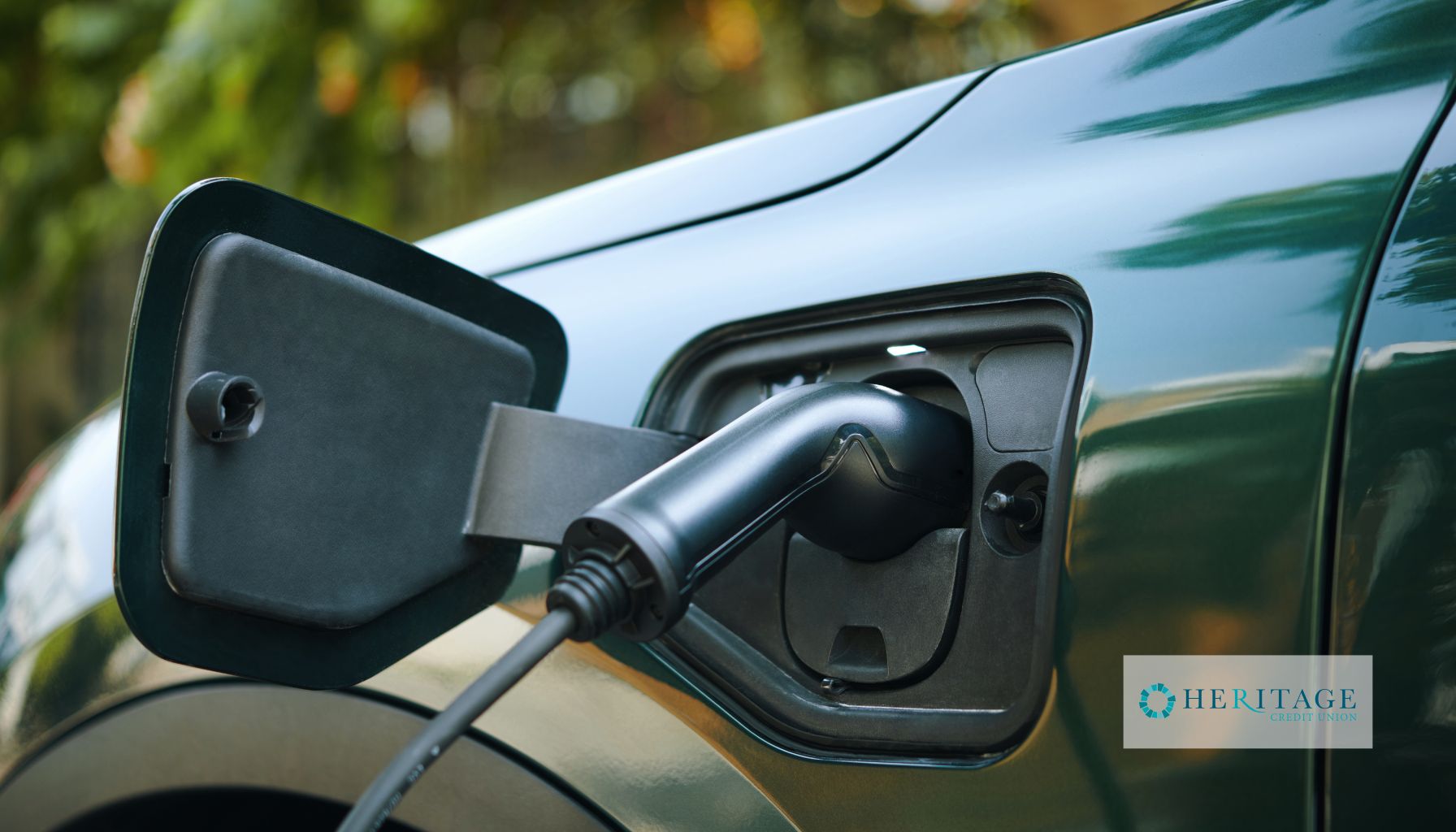
Add to that the fact that fuel, servicing and motor tax all significantly cheaper than petrol or diesel, electric vehicles can deliver real long-term savings for Irish drivers. A home charging point is key and charging at home on a night-rate tariff can cost a fraction of what you’d spend at the pump, while lower maintenance and €120 annual motor tax help reduce ongoing costs even further.
Government supports such as the SEAI EV grant and VRT relief can help offset the upfront price of a new EV - however, second hand EVs are not eligible for the grant - they do tend to be eligible for great value green loans though!
Managing Your Energy Usage
Energy costs make up a significant portion of the average Irish household’s spending - with an average family of four spending around €214 per month on utilities according to Instarem. With energy prices still volatile, managing how and when you use energy is an effective way to reduce everyday household spending.
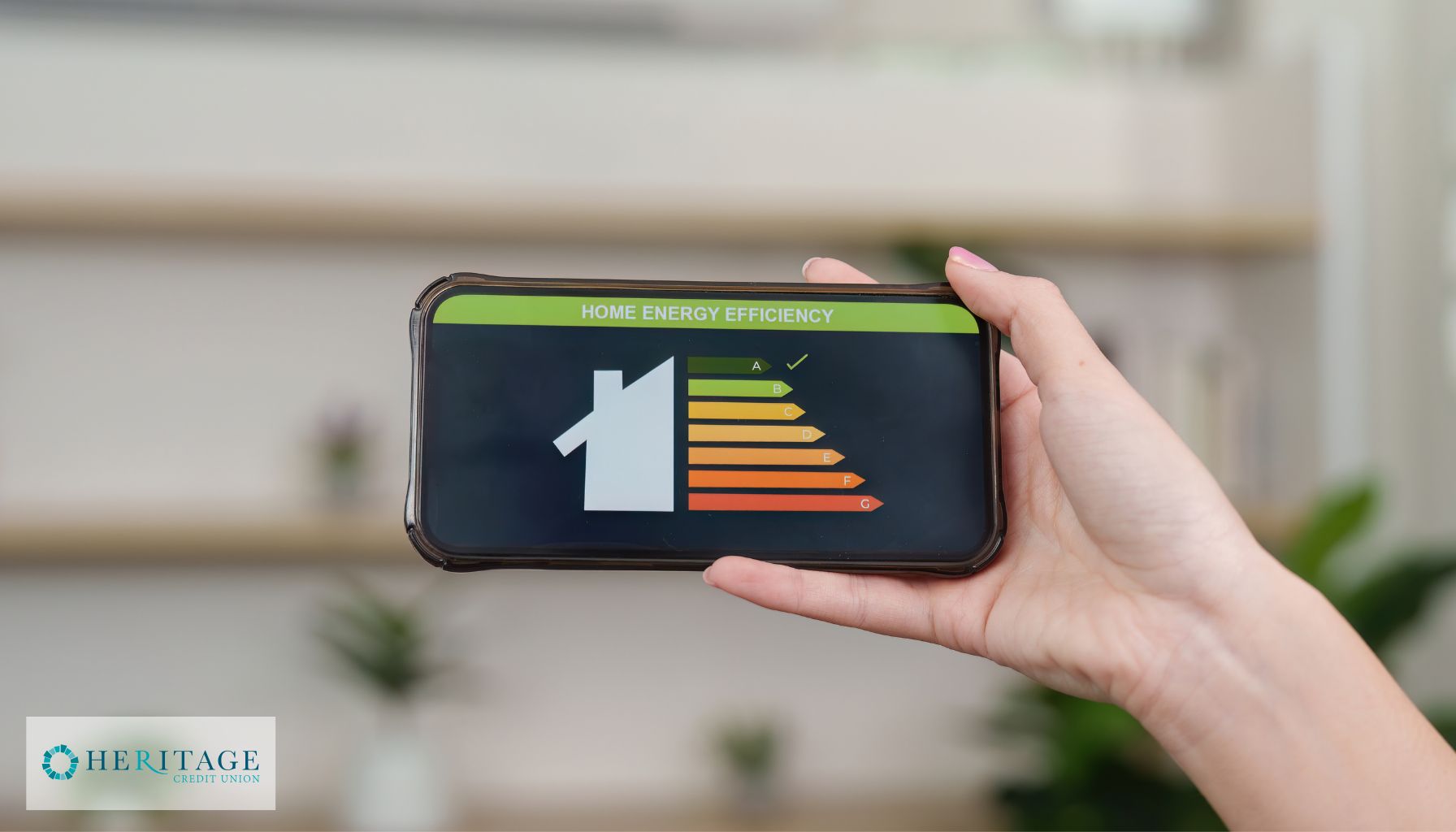
The New Year is a great time to take stock of your usage and consider carrying out a simple home energy audit. This doesn’t have to be complicated - it simply involves reviewing recent bills, understanding your main energy drains, and identifying quick wins. And it can reveal some opportunities for real savings.
Top Energy-Saving Tips from Our Team
- Switch to energy-efficient appliances and LED bulbs: “Switching to energy-efficient appliances and LED bulbs is one of the easiest wins. A-rated appliances and LEDs use far less electricity, and the savings really add up over time.” - Alan, CEO
- Use a smart thermostat: “A smart thermostat is a great investment. It helps you heat your home only when you actually need to, so you’re not paying to heat empty rooms.” - Niall, Lending Manager
- Reduce hot water usage: “Hot water is one of the biggest energy drains in a home. Even slightly shorter showers, especially with electric showers, can make a noticeable difference to your electricity bill.” - Laura, Marketing Officer
- Turn off appliances at the wall: “Turning appliances off at the wall sounds small, but standby power really does add up over the year. It’s an easy habit that costs nothing to adopt.” - Aaron, Digital Marketing Officer
- Be aware of peak vs off-peak rates: “Understanding peak and off-peak electricity rates is key. Running your washing machine or dishwasher at night can be much cheaper than during the day.” - Niall, Lending Manager
- Charge your EV on a smart night tariff: “If you drive an electric vehicle, charging on a smart night tariff is a no-brainer. Overnight charging at home is far cheaper than daytime or public charging.” - Laura, Marketing Officer
- Air-dry clothes where possible: “Air-drying clothes whenever possible saves a surprising amount of energy. Tumble dryers are one of the most power-hungry appliances in the home.” - Alan, CEO
- Let food cool before refrigerating: “Letting food cool before putting it into the fridge helps reduce the workload on your fridge and freezer which means lower electricity use overall.” - Laura, Marketing Officer
- Only boil the water you need: “Only boil the amount of water you actually need in the kettle. It’s a small change, but it saves both electricity and water every single day.” - Laura, Marketing Officer
- Consider energy-efficient home upgrades: “Longer-term upgrades like insulation, heating improvements, solar panels and better windows can really transform a home’s energy efficiency and reduce bills for years to come.” - Alan, CEO
As Alan points out, larger home energy upgrades can be a real game changer in the long term - for example, according to SEAI, you can save up to €600 per year on heating bills with well insulated walls and attic space. There are SEAI grants available for a whole host of upgrades including attic insulation, wall insulation, heat pump systems, solar panels and more. And to cover the remainder of the costs, or for projects not eligible for grants, we offer an excellent value Green Loan (with rates as low as 6.07% APR).
Making the Most of Workplace Benefits
Your wages aren’t the only way that your job can impact your ability to save. Many employers now offer workplace benefits that can significantly reduce everyday living costs. Yet these perks often go underused simply because people aren’t fully aware of what’s available to them. Taking the time to understand and make the most of your benefits can be a great way to add marginal gains to your ability to save. Common workplace benefits that can help stretch your budget include:
- Health insurance: According to this Irish Times article - “some 520,000 people have their health insurance paid in full or partially by their employer”. Employer-supported schemes can significantly reduce the cost of private healthcare and ongoing medical expenses.
- Cycle to Work schemes: We’ve mentioned this already but worth repeating here - this scheme offers tax-efficient access to bicycles and safety equipment, helping you save on transport while boosting your health.
- Support for parents: Businesses may offer one or more of a range of employer supported childcare initiatives from flexible work policies to allow parents to save on childcare costs to the less common employer sponsored childcare programs.
- Retail discounts: Staff retail discounts are a common employee benefit where employees can purchase goods and services at a reduced price. These benefits can be offered directly by the company on its own products, or through partnerships with other businesses, and they help improve employee satisfaction and save money.
- Subsidised gym memberships: Some employers offer lower-cost access to gyms, fitness classes and wellness programmes. Whilst this can offer a decent saving, it’s important to note that in Ireland, this is typically considered a taxable Benefit-in-Kind (BIK), meaning employees must pay Income Tax, PRSI, and USC on the value of the benefit
If you’re unsure what benefits are available to you, your HR department or employee handbook is a good place to start. Even one or two of these supports can ease pressure on your monthly budget and improve your overall financial wellbeing.
Exploring Tax Relief & Government Schemes
Many households in Ireland are unknowingly entitled to tax reliefs and government supports. Making sure you’re accessing every support available to you can make a real difference to your yearly finances.Some of the most common reliefs and schemes worth checking include:
- Medical Fees Tax Relief: You can claim tax relief on many medical expenses that are not covered by the public health system or private health insurance.
- Fuel Allowance: A weekly payment to help eligible households with the cost of heating during the winter months.
- Household Benefits Package: Supports for electricity or gas bills and television licence costs for qualifying individuals, particularly older people and those in receipt of certain social welfare payments.
- Mortgage Interest Relief: Relief for eligible homeowners who are paying mortgage interest, depending on their circumstances and when their mortgage was drawn down.
- Rent Tax Credit: A tax credit available to renters to help offset the cost of renting a home.
- Rent-a-Room Relief: Homeowners can earn up to a set threshold in tax-free income by renting out a room in their principal private residence, subject to conditions.
Tax rules and eligibility criteria can change, so it’s always a good idea to check the most up-to-date information through Revenue or the relevant government department.
Heritage Credit Union’s Smart Savings Checklist
You can download a PDF version of our Smart Savings Checklist here.
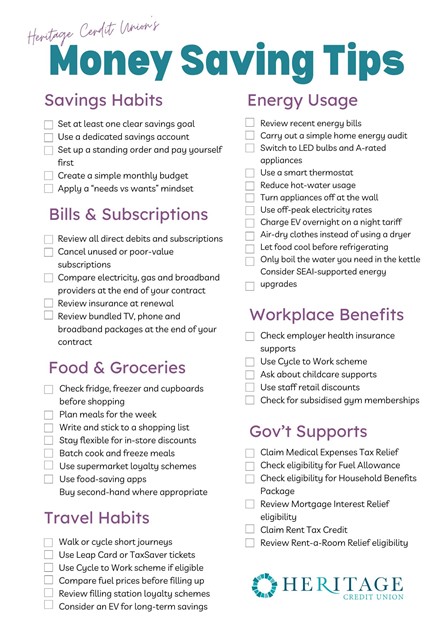
The Final Word on Savings
So there you have it. As we’ve mentioned, the start of a new year is the perfect opportunity to reset your finances and put simple, practical plans in place for the months ahead. As this guide shows, small, intentional adjustments to how you spend, save and plan can lead to meaningful long-term benefits.
We hope these tips will help you to keep on top of your finances into 2026 and beyond and help to deliver security, reduce financial stress, and give you the freedom to plan for the future with confidence.
If you’d like support along the way, the team at Heritage Credit Union is always here to help. Whether you’re looking to open a new savings account, set up a regular savings plan, or simply talk through your goals, we’re ready to support you every step of the way. You can get in touch here.





![Household Savings Guide - Top Money Saving Tips for Irish Households [2026]](/media/4isdst33/household-savings-guide-top-money-saving-tips-for-irish-households.png{"src":"/media/4isdst33/household-savings-guide-top-money-saving-tips-for-irish-households.png","focalPoint":null,"crops":[{"alias":"articleImage","width":668,"height":463,"coordinates":null},{"alias":"articleImageSmall","width":326,"height":226,"coordinates":null},{"alias":"articleImageMobile","width":600,"height":300,"coordinates":null},{"alias":"relatedArticlesImage","width":300,"height":150,"coordinates":null}]})


