23 April 2026
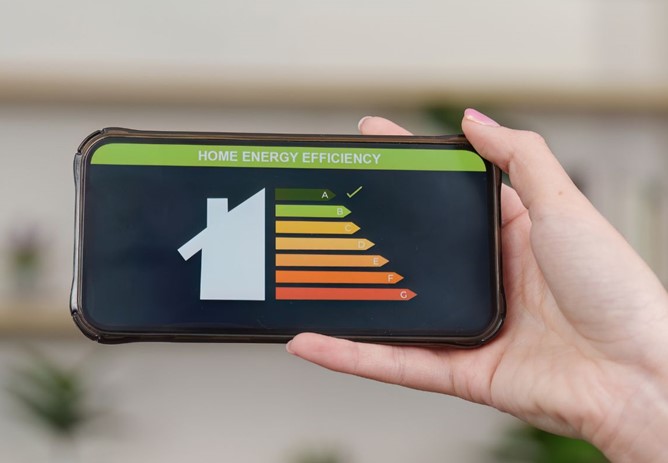
Making Your Home More Energy Efficient: A Guide to Retrofitting Options in Ireland (2026)
Domestic energy costs in Ireland are at an all time high and according to a new analysis from the Nevin Economic Research Institute (NERI) prices here are “dramatically outpacing both inflation and what customers and businesses elsewhere in the western EU are facing.” That same study has found Irish households pay around €360 more per year than the western EU average.
So if you’re a homeowner in Ireland, you’ve likely been feeling the pinch. Whilst we can’t promise that energy prices are going to come back down to earth any time soon, what we can do is offer advice on how you can reduce the amount of energy that your household uses in the first place. The most obvious place to start is with retrofitting - the range of government grant supports currently available make energy efficient upgrades to your home a feasible option for many households.
The Irish government has committed to retrofitting 500,000 homes to a Building Energy Rating (BER) of B2 or better by 2030 under the Climate Action Plan. It’s an ambitious target, and the funding behind it reflects that. In 2026 alone, €558 million has been set aside through SEAI to help homeowners make exactly these kinds of improvements. (Source: gov.ie)
The reality is that a large proportion of homes across Dublin and the wider country are still losing heat through things like poorly insulated walls, single-glazed windows, and outdated heating systems. That’s money leaving your home every month that doesn’t need to. A well-planned retrofit can cut that waste significantly - and at the same time improve the comfort, health, and long-term value of your home.
In this guide, we’ll walk you through the main options, what’s available in terms of grants, and how to think about financing the work. As always, if you have questions specific to your own situation, our team is happy to have a chat.
Why Bother With Home Energy Upgrades? The Real Benefits of Retrofitting
So we’ve touched on the main argument for retrofitting already but it’s worth running through the range of benefits associated with home energy upgrades before we get into the specific ways in which you can improve your home's energy efficiency. These are:
- Reduced energy bills
- Lower carbon emissions
- Higher BER rating and increased property value
- Improved comfort and health
Reduced Energy Bills
This is the benefit most people think of first, and with good reason. Upgrades like improved insulation and modern heating systems can make a meaningful dent in what you spend keeping your home warm. For many households, the savings accumulate quickly enough that the upgrade effectively pays for itself over time.
Lower carbon emissions
Heating is one of the biggest contributors to household emissions in Ireland. Upgrading your home is one of the most tangible things an individual household can do to reduce its environmental footprint. And as we’ve referenced earlier, Ireland’s Climate Action Plan depends on homeowners making exactly these kinds of decisions.
Higher BER rating and increased property value
Let’s be honest, most people don’t just aim for a higher BER as a badge of honor. One major benefit of a better BER rating is that it can improve your home’s value and saleability. So if you’re considering selling your home down the line, or keeping that option open - an improved BER could make a significant difference to the price you can achieve.
Improved comfort and health
One often overlooked benefit of home energy upgrades is the impact they can have on your comfort and health, and that of your family. Living in a cold, draughty home has real consequences for physical and mental wellbeing. A well-insulated, properly ventilated home is simply a more pleasant place to be. And for families with young children or older relatives living with them, that isn’t a small thing.
The Main Ways to Improve Your Home’s Energy Efficiency
Every home is different, so the right combination of upgrades will depend on your property’s age, construction, and current rating. That said, here’s a practical overview of the main options available to Irish homeowners in 2026:
- Insulation
- Heating systems
- Solar panels
- Windows and doors
- Ventilation and airtightness
1. Insulation
Insulation is widely regarded as the most cost-effective upgrade available, with relatively quick payback periods and immediate improvements to how your home feels. According to gov.ie, simple upgrades like attic insulation, cavity wall, or external wall insulation can reduce heating bills by up to €230 annually.
Heat rises and escapes through any gap it can find, but poorly insulated walls and attics are the biggest culprits. According to the SDCC: “A well-insulated house will keep the heat you make. A badly insulated home may lose 30% of your heat through the roof and a further 30% through the walls”.
So without adequate insulation in these areas, a significant portion of the heat you're paying to generate is quite simply disappearing out of your house.
When it comes to insulation, your main options include:
- Attic insulation: typically the easiest and most affordable place to start
- Cavity wall insulation: suitable for most homes built after the 1940s
- Internal or external wall insulation: more involved, but necessary for solid-wall properties
- Floor insulation: often overlooked, but can make a noticeable difference
And the good news is that, when it comes to funding for insulation projects, SEAI grants limits have been increased for 2026. Attic insulation grants now go up to €2,000 depending on property type, and cavity wall insulation grants up to €1,800. Homeowners on qualifying welfare payments may be eligible for even higher support, with the grant in some cases covering most or even all of the cost.
Ed Claxton is the founder of the external insulation company, WarmSeal Insulations. He explains:
"Whilst many of the projects we undertake are partially funded by SEAI grants, such as the external wall insulation grant, we've observed that our customers often use the opportunity to make additional home upgrades simultaneously. So we see that grants are typically combined with other forms of funding like Green Loans."
2. Heating systems
Once you’ve addressed how heat stays in your home, the next challenge is how efficiently you’re generating it. Ireland is rapidly phasing out oil and gas boilers to meet climate goals, effectively banning them in new residential builds as of 2022 (oil) and 2025 (gas). And the grants available for alternative heating systems reflect that.
Heat pumps (air-to-water or ground source) are the most significant upgrade most homeowners can make. The SEAI grant for heat pump installation now goes up to €12,500 - a €6,500 grant for the unit, €2,000 for required heating system upgrades (e.g. radiators), and a €4,000 renewable heating bonus, which is a substantial increase from previous years, and by far the largest single grant available under the scheme. Bear in mind that heat pumps work most effectively in well-insulated homes, so if you’re planning this upgrade, it’s usually worth doing insulation first.
High-efficiency boilers are an option for homes where a heat pump isn't yet suitable (e.g. where insulation levels are still too poor to support the lower running temperatures heat pumps operate at, where replacing undersized radiators throughout the home isn't feasible, or where the full upfront cost is prohibitive despite the available grants).
Smart thermostats and zoned heating controls are another option for those who want to reduce waste without requiring major work. According to SEAI, installing heating controls can typically cut your energy usage by up to 20%. There's an SEAI grant of €700 available to help cover the cost, though it's worth noting this grant isn't available if you're also claiming the heat pump grant, making it best suited to homes staying on their existing heating system for now.
3. Solar panels
Solar is one of those upgrades that, in the past at least, would sometimes be dismissed out of hand in Ireland. But it’s worth clearing up the old misconception - modern solar panels don't need direct sunlight to generate electricity. They actually work on daylight, which makes them a perfectly viable option in Ireland in many cases.
Obviously, the shorter days of winter do mean reduced output so the more panels, the better. A solar installer will typically design your system based on your annual energy usage, accounting for the seasonal variation. Many homeowners also pair their solar PV system with a home battery, storing excess daytime generation for use in the evenings which has it’s benefits all year-round, but is particularly useful in winter when daylight hours are shorter.
It's worth knowing that there are actually two types of solar technology, and they do different things. Solar PV (photovoltaic) panels generate electricity from daylight, which can be used to power your home and reduce your electricity bills. Solar thermal panels, on the other hand, use the sun's energy to heat water, reducing the amount of energy your boiler or immersion needs to do that job. Both have their merits, but for most Irish homeowners today, solar PV is the more popular option, and there's a strong financial case for it.
Key advantages of installing a Solar PV system include:
- It's a renewable energy source: once installed, the sun does the work, with no fuel costs and no emissions.
- It reduces your electricity bills: by generating your own power during the day, you're drawing less from the grid, which has a direct impact on what you pay.
- You can get paid for surplus energy: through the Microgeneration Support Scheme (MSS), any excess electricity you generate and export back to the grid earns you a payment from your energy supplier.
- It reduces your dependence on the grid: generating your own electricity means you're less exposed to energy price fluctuations and supply uncertainty. With a home battery, you can store what you generate and draw on it when you need it most, giving you a greater degree of energy independence.
- Maintenance costs are minimal: solar panels have no moving parts and typically come with a 25-year performance guarantee. Once they're up, there's very little ongoing cost.
The SEAI solar PV grant remains at €1,800 for 2026, and with 0% VAT on installation still in place, a typical system can pay for itself within four to seven years through bill savings and Clean Export Guarantee payments.
As with most home energy upgrades, the key is thinking about it as a long-term investment rather than an immediate cost. And when you factor in rising electricity prices and the income from surplus energy export, the numbers stack up well.
4. Windows and doors
Estimates suggest that around 10% of a home’s heat can be lost through inefficient glazing and frames.
One significant development this year when it comes to SEAI grants is the launch of a standalone grant for energy-efficient windows and doors (previously, this support was only available through the full One Stop Shop retrofit route). The new grant offers up to €4,000 for windows and €1,600 for doors, and the SEAI portal is already open for applications. To qualify, your home must have been built and occupied before 2011 and have adequate attic and wall insulation already in place.
Budget 2026 also maintains 0% VAT on energy-efficient window installation, making this an especially good time to act if your windows are overdue for an upgrade.
5. Ventilation
As homes become better insulated and more airtight, ventilation becomes increasingly important as the same sealing that keeps heat in also tends to keep moisture in. A family of four releases around 20 litres of water vapour into the air every single day through breathing, cooking, and showering. In an older, draughty home, that moisture escapes naturally. In a well-sealed, energy-efficient home, tends to have more difficulty escaping and if ventilation isn't properly managed, the result is condensation, damp, and mould. Not only can this cause physical damage to your house, it can also adversely affect your family's health.
Ventilation doesn’t necessarily have to be complicated or expensive. There's a range of solutions for your consideration depending on your specific situation:
- At the simpler end, pairing extractor fans in kitchens and bathrooms with sealing gaps around doors, windows, letterboxes, and pipework is a basic and low-cost approach that is likely to be good enough for many homeowners. This combination basically removes moisture at the source and can be enough to keep your home air-tight and well-ventilated without requiring major work or significant spending.
- “Passive ventilation” is another simple solution - trickle vents in windows and background wall vents allow a controlled level of airflow without heat loss. These are a step up from simply opening windows and are often already present in homes built in the last two decades, though they're frequently overlooked or blocked off.
- At the higher end of the spectrum, Mechanical Ventilation with Heat Recovery (MVHR) is often considered as part of more comprehensive retrofits, particularly homes targeting a high BER rating. An MVHR system works by continuously extracting stale, moisture-laden air from wet rooms like kitchens and bathrooms, while simultaneously drawing fresh air in from outside. Up to 90% of the heat from the outgoing air is recovered and used to pre-warm the incoming fresh air, meaning you're not losing the energy you've spent heating your home every time the system ventilates.
While there is no standalone SEAI grant specifically for MVHR installation, green loans, like the Heritage CU Green Loan, can offer an affordable way to finance the upgrade, making it a more accessible option for homeowners who are serious about taking a whole-house approach to energy efficiency.
How to Fund Your Home Improvements
There are several options available to Irish homeowners in 2026, and for most projects, the right approach is some combination of grant support and financing rather than one or the other. We have written a detailed guide on financing home improvements in Ireland that we would encourage you to read next. In the meantime, here’s a quick overview of the main financing options available:
- Savings: For those in a position to do so, the easiest way to finance home improvements is by using savings. This is particularly relevant for small to medium-sized projects, such as redecorating, minor kitchen or bathroom upgrades, or any other project where the costs are manageable without dipping too far into your reserves. By using savings, you avoid interest costs entirely, don’t have to deal with monthly repayments, and the funds are available immediately.
- SEAI Grants: The SEAI offers individual energy upgrade grants across a wide range of measures (including insulation, heat pumps, solar panels, windows and doors and more), and the amounts available in 2026 are the most generous they've ever been. Grants don't have to be used in isolation either - they can be combined with a green loan or home improvement loan to cover whatever the grant doesn't.
- Personal Loans: A standard personal loan - typically unsecured, with fixed repayments - can work well for smaller to mid-sized projects, particularly where the work doesn't directly affect your home's energy rating. Bathroom upgrades, a new kitchen, and general improvements. The speed of access and straightforward repayment structure are the main advantages. The trade-off is that rates tend to be higher than on products designed specifically for home improvements, so it's worth comparing carefully before committing.
- Home Improvement Loan: Most lenders, including credit unions, now offer loan products specifically designed for home improvement projects. These loans tend to come with more appropriate terms and conditions than a general personal loan. At Heritage Credit Union, our Home Improvement Loan is unsecured, carries an interest rate of 7.9% APR, and offers flexible repayment terms. For mid to large-scale renovation work, it's worth asking about this option before defaulting to a standard loan.
- Green Loans: Green loans are designed specifically to support energy-efficiency upgrades: insulation, heating systems, solar panels, new windows, EV chargers, and more. A green loan is best for homeowners planning energy-efficiency upgrades, those who don’t qualify for SEAI grants but still want to improve their homes, or those who want to combine financing with grant support to cover any shortfall. For larger retrofit or renovation projects, the Heritage CU Green Loan offers particularly strong value thanks to its discounted rates on loans above €20,000.
- Mortgage Top-Up or Equity Release: For major renovations like a full retrofit, a large extension,or a whole-house refurbishment, releasing equity through a remortgage can provide access to a lump sum that shorter-term borrowing simply can't match. You do need to factor in legal and valuation fees, potential early repayment penalties if you're mid-term, and the reality of taking on a larger mortgage over a longer period. It's not the right fit for every situation, but for homeowners with significant equity planning substantial works, it's a route worth exploring with a mortgage advisor.
So.. What Now?
We hope you’ve gained some useful knowledge from this article around making your home more energy efficient and you’re not too overwhelmed with information. What we would stress is that retrofitting doesn't have to happen all at once. Many homeowners start with one upgrade (e.g. insulation, new windows, a heating control) and build from there. Others use a trigger like a boiler giving up or a grant deadline to take on something more substantial.
Either way, the grants and financing available in 2026 mean that the numbers work for more households than they used to. If you're ready to look at funding your next upgrade, Heritage Credit Union's Green Loan offers flexible borrowing from €1,000 up to €150,000, with no hidden fees, no early repayment penalties, and discounted rates for larger projects.





![Household Savings Guide - Top Money Saving Tips for Irish Households [2026]](/media/4isdst33/household-savings-guide-top-money-saving-tips-for-irish-households.png{"src":"/media/4isdst33/household-savings-guide-top-money-saving-tips-for-irish-households.png","focalPoint":null,"crops":[{"alias":"articleImage","width":668,"height":463,"coordinates":null},{"alias":"articleImageSmall","width":326,"height":226,"coordinates":null},{"alias":"articleImageMobile","width":600,"height":300,"coordinates":null},{"alias":"relatedArticlesImage","width":300,"height":150,"coordinates":null}]})


